

Interested in this product?
For more detailed information including pricing, customization, and shipping:
|
Origin |
: Indonesia |
|
IUPAC Name |
: N/A |
|
Cas Number |
: 143-07-7 |
|
HS Code |
: 3401.20.20 |
|
Formula |
: N/A |
|
Appearance Name |
: White Solid |
|
Common Names |
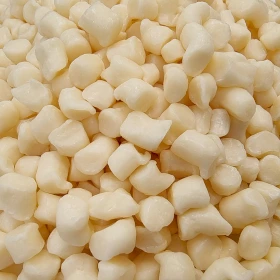
: Soap Chips |
|
Packaging |
: 25 Kg Polypropylene Bags |
For more detailed information including pricing, customization, and shipping:
Brief Overview
To make soap noodles, vegetable oils including palm, coconut, olive, and/or animal fat (tallow) are saponified using sodium hydroxide. The earliest known types of soap are said to have been soap noodles. Because soap noodles are easy to customize with colors, flavors, and other components to manufacture soap, both novice and professional soap makers utilize them. Molding, pressing, and stamping are other techniques that can be used to further alter the final product of this soap.
Manufacturing Process
The primary method of making soap, known as direct saponification, involves combining triglyceride and sodium hydroxide. Fatty acids and glycerol are byproducts of hydrolyzing fats and oils. The next action is to use sodium hydroxide to neutralize these fatty acids. When methanol is used to transesterify fat or oil, methyl esters are created. When sodium hydroxide is used to saponify the methyl ester, soap is produced, and methanol is a byproduct.
Detergent Industry
Soap mixtures undergo homogenization through rollers or a high-pressure worm screw. This process creates a thin soap sheet or multiple layers extruded through a perforated endplate. A plodder compresses the homogenized soap into a continuous bar.
Various soap noodles' specifications yield different types of soap, such as toilet, laundry, translucent, high-lather, and medicated soaps.












.webp)
.webp)
.webp)